“The call to be disciples”
Mark 1:14-20 (January 21, 2024)
Now that we’re here, in the middle of January, can we say that Christmas is finally finished? The tree is gone, the decorations are put away. So what now? Who is this child? What does it mean for us that God has entered our creation?
Today the Gospel of Mark takes us to the beginning of Jesus’ public ministry: His proclamation of the kingdom, his calling of disciples.
✠
 There they were: Simon (who would later be called Peter) and his brother Andrew, doing what they’d always done, casting a net into the sea.
I can imagine the sun shining down upon them. A gentle breeze. The net splashing in the water. The shimmer of fish as they pulled it up. The anticipation of selling the catch. And maybe taking some of it home for dinner. Thoughts of rest at the end of a long day.
And then this stranger came along! Came to interrupt their lives, however idyllic they may have been. Or maybe their lives were a struggle. Or a long monotonous grind.
Whatever they were, Jesus came to them right there on the beach, by the Sea of Galilee. And he said to them: “Follow me.”
What we have here is a cosmic interruption. A tearing of fabric. Like a thunderclap, or a lightening strike. An epiphany, actually.
Jesus appears to us, and suddenly everything changes. He calls to us and we cannot ignore him! He meets us in our Galilee.
✠
 And what I’d like you to think about this morning, to begin with, is what your Galilee looks like? In other words, what is the landscape of your life?
Where are you living? Who are your neighbours? When you get up in the morning, are there places you need to be? Appointments, responsibilities, tasks to be accomplished?
They don’t have to be big. Plugging in the kettle, preparing breakfast, reading a paper, going for a visit, waiting for someone to call.
What is your Galilee? Where is your beach? What is your boat? What’s the net you have to hoist? Who is there with you? Is it hard or easy? Is it always the same every single day?
✠
And now, think of this: how has the landscape of your life changed over time? Because I’m willing to bet things are different now than what they used to be. Our lives never stay the same. The Galilee we live in today is not the Galilee that used to be.
And so the question is, when the call of Jesus comes, how do we answer it in our present time? How do you live out your call to be a disciple, a follower of Jesus, in the landscape of today, not years ago. Because although the voice is the same, the surroundings will look quite different. And so our life of discipleship will have to change as well.
Over the years, we go through many Galilees. We switch jobs, we change careers, we may stop working altogether – at least for money. Relationships change, families grow, loved ones die, new friendships are made. Our bodies and minds, interests and abilities – none of these ever stay the same.
But Jesus still comes to us, right where we are! In the midst of our day. We hear that voice that will never leave us. The voice that keeps calling us, lovingly, persistently. “Come, follow me!”
 The call to be a disciple is life-long. Jesus doesn’t stop calling us. We still listen for his voice. In the life of faith, we do not retire.
But discipleship may look quite different depending on what stage or season of life we are in. We should not expect to keep on doing what we always did before. Instead, we should be open to new opportunities, new ways of expressing faith and following our Lord.
✠
“The kingdom of God has come near,” said Jesus, “Repent, and believe in the good news.”
 Repent means to change your mind and, by implication, a whole lot of other things as well. Change is the first step on the path of discipleship. Jesus tells the fishermen to leave what they’ve been doing. “Drop your nets. Step out of the boat. I’m going to teach you a new way of fishing.”
Wow, did the disciples have any idea what Jesus had in mind for them? Where he would take them? What they would experience and learn along the way?
Do we have any idea what Jesus has in store for us? In the broadest of terms, of course we do! His desire for us is good, not ill. That doesn’t mean that discipleship will be easy. Only that it will be worth it!
✠
 Leave your nets and follow me. What does that look like for you? What might you have to leave behind? Because Jesus has something else in mind for you now. As our Galilees change, our calling changes too!
A friend of mine sent me a Christmas letter this year. It was great to read all the news about him and his family. But nothing is the same as it used to be.
He lost his first wife, the one I knew, several years ago to cancer and has since remarried. His children, contemporaries of my own, have grown up. (Who knew they’d do a thing like that?) Now they have children of their own. He’s retired from his work and has had some amazing travels.
At one point in the letter he paused to reflect on his role as a father, saying that it had shifted. He’s no longer the provider. He sees his role more as one who stands in the background, offering support as each of those adult children live their own independent lives. And new grandchildren begin to find their way.
That observation resonated with me, because I can see that my role is changing too. And I find myself asking those same questions: Now, who am I to be? What does it look like for me to be faithful in this present time?
✠
“Repent and believe,” says Jesus. “Leave your old ways behind. Move into the future. Trust my promise that the Kingdom is near.”
As difficult as it may be to leave and let go of things that have long been part of our lives, there remains this call, this opportunity to learn new ways – following Jesus, welcoming the new life he brings.
As we move through the landscape of our different Galilees, we discover that there is life in every stage. There is always something more for us to be and do. More for us to learn.
 Or do you think you know it all? At what age do we know it all? Can we be humble enough to admit there may be things we actually have to unlearn? Habits and opinions for example: You had your mind made up, and everything (you thought) was settled. You used to think one way. And maybe that way has served you well. But now you see through different eyes.
There’s no shame in that. In fact, it’s crucial if we want to be disciples of Jesus. That very word “disciple” means a student, a learner of Jesus’ way. The more we follow, the more we learn. At each turn there is something new. A door that opens before us.
✠
As we move through the lives we have been given, discipleship may be less about doing things. And more about being. Being open to the moving of God’s Holy Spirit. Being there for others. Being more loving. Being ready to forgive. Being generous with the gifts and resources that we’ve been given. Growing in our desire for God each and every day.
“Repent and believe!” Are you open to the presence of God’s Kingdom? Jesus is calling to us. Always calling. He never stops, never goes away. Can you hear that voice?
The amazing part of our scripture reading today is how quickly those fishermen did follow Jesus. “Immediately,” Mark tells us, they left their nets. Without any hesitation.
And then, just to make sure we got the message, Mark tells us about two more of Jesus’ disciples: James and John, the sons of Zebedee: “Immediately he called them; and they left their father Zebedee in the boat with the hired men, and followed him.”
Can you imagine the shock of it? Old Zebedee watches his beloved sons turn around and walk toward Jesus. They’re willing to drop all they have, right then and there, for the sake of the Kingdom. So the pattern repeats!
And now it comes to us. This persistent call: “Come, follow me.”
✠
There’s a kind of magnetism to Jesus that speaks to us, compels us. A voice that draws us forward into God’s new life, wherever we may be. A force we cannot deny. A tug, a pull. A lightning strike.
Dietrich Bonhoeffer wrote about this in his book, “The Cost of Discipleship,” which was published in 1937 just as Nazi power and influence was growing. Bonhoeffer wrote, “We are not expected to contemplate the disciple, but only him who calls, and his absolute authority.” An authority that, for Bonhoeffer, compels obedience, even in the face of dark forces.[1]
✠
“Come and follow me.” Jesus calls to us in all our many Galilees. Where is yours? What might it look like for you to follow Jesus today?
There’s a striking verse at the end of Mark’s Gospel, which provides a kind of “bookend” to our scripture reading. In chapter 16, Jesus has been crucified. And the disciples must have wondered if their journey was over. But standing by the empty tomb, Mary Magdalene, and Mary the mother of James, and Salome, receive a message from a mysterious young man dressed in white.
“Tell his disciples and Peter (that same Simon Peter who first heard the call while casting a net by the sea) …tell them “He is going ahead of you to Galilee. There you will see him.” One stage of the disciples’ journey has finished. But a new one is about to begin.
The call to be disciples comes to us always fresh, always new, in the Galilees of our daily living. “Come, follow me.” Amen.
[1] Chelsea Harmon, https://cepreaching.org/commentary/2024-01-15/mark-114-20-4/, Accessed Jan 16, 2024.
Sunday, January 14, 2024 First Mennonite Church – Harry Harder
Geography of the Bible
Geographical map of Palestine
Hills of Galilee
Sea of Galilee
Jordan Valley
Jerusalem
Nazareth
Today’s scripture story is in situated in Nazareth. I will take the opportunity to describe some of the geography of the place.
Galilee is in the north of Israel. Contains the Sea of Galilee (also called Genesarret, Kinneret, Tiberias). Galilee is a hilly region, south of the Lebanon mountains. South of Galilee are the hill regions of Samaria and Judea (site of Jerusalem). Jordan Valley is a long trough that is eastern border of the region.
Scripture: Luke 4:16-30
Meditation:
This is the story in the gospel of Luke of Jesus making his announcement in Nazareth of the beginning of his ministry. Jesus had been baptized by John in the Jordan River. After he came up from the river, the holy spirit descended on him like a dove and a voice was heard saying “ You are my Son, the Beloved, with you I am well pleased.” Luke the Gospel writer emphasized that Jesus has been anointed by God for his ministry. He has God’s divine blessing for what he is about to do.
And so Jesus returns to Galilee and begins preaching in the synagogues of the region. His activities gain attention and even before he comes to his hometown of Nazareth, the people there have already heard what he is doing. This is Joseph’s son—the hometown boy.
On the sabbath he shows up at the synagogue in Nazareth, just like he has always done, with the rest of the local worshipping community. But this time he is given the Torah scroll to read—to read and then exposit about what he just read, to do a sermon. “You went to seminary. Let’s see what you can do.”
The portion he reads is from Isaiah 61: 1-2 61 The spirit of the Lord God is upon me, because the Lord has anointed me; he has sent me to bring good news to the oppressed, to bind up the broken-hearted, to proclaim liberty to the captives, and release to the prisoners; 2 to proclaim the year of the Lord’s favor, and the day of vengeance of our God; Jesus takes some liberty in quoting his Bible verses. The last phrase ‘the day of vengeance of our God” in Isaiah is omitted in what Jesus says. That takes out the negative aspect of Isaiah’s message. From 58: 6 to “let the oppressed go free.” is added. These adjustments put emphasis on “me”, Jesus is identifying himself in these verses. The word or theme “release” becomes very prominent. Jesus will be the agent who brings release. The word “release” in Luke often has the meaning of forgiveness—release from sins or “forgiveness of sins”. Jesus is the one who grants forgiveness of sins. Forgiveness implies restoration or entry into the community. Who are the poor, the oppressed, that are highlighted? “Spiritually poor” doesn’t cover this category. Status in this culture was defined not just by economic wealth, or if you were a Jew or a Gentile, but by factors such as education, gender, family heritage, religious purity, vocation. All these things determined social boundaries of who was inside or outside of the boundaries of God’s people. These things were all very well understood. Jesus did not recognize these markers and by so doing said that these outsiders were not beyond God’s grace—they too had a way open to God’s salvation. “Recovery of sight” is not just about physical healing but also a metaphor about receiving revelation(being able to see, discern what is happening) and experiencing salvation and inclusion in God’s family.
The passage also draws attention to the Jubilee. The year of Jubilee was part of the law in Leviticus. Every 50 years was to be a year of great reset in the Israelite nation. The release of debts---slaves set free, land left fallow, debts forgiven, land being returned to the original owners. The economic playing field was to be levelled every 50 years. Jesus is the anointed herald of God’s gracious visitation when the social and economic order will be reset. So the people heard the scroll being read and they reflected on the themes of deliverance which they as a people had experienced through history. They responded positively to Jesus reading and were impressed by their own, ”Joseph’s son”, doing so well, and by his gracious words. The people of Nazareth see in Jesus the beginning of prophetic powers, but their understanding of what that meant is different than Jesus’ own vision. For them especially, Joseph’s son could be a special source of God’s favor. Jesus will act as one of us. But Jesus says to them, “You will tell me, “Doctor, cure yourself. Do also in your hometown the things we heard you do in Capernaum.’” That is what you want me to do, isn’t it?
The townspeople’s feeling is “We have heard you do things of great benefit to others. Don’t refuse to do those things also for your own relations. We’ve heard about what you are doing. We are in need of healings and miracles here in Nazareth too. Don’t do all this for other people’s benefit if you refuse to do the same for us.” Jesus saw his ministry for all people, especially for those who claim no status or favor with God. The townsfolk of Nazareth had an inhibited vision of what Jesus was about. They felt they were privileged because Jesus was one of them. This releasing business Jesus was talking about—well they were going to be first in line. Then Jesus refers to - two Old Testament stories. Scripture Reading: 1 Kings 17: 8-24 There was a great three year famine in Israel and Elijah goes for refuge not to his own country but to Sidon, further north in what is now Lebanon, where he is received and cared for by a destitute woman. She was a foreigner, a woman, a widow --all marks of someone being outside the boundaries of God’s people. Scripture reading: 2. Kings 5: 1-19 Namaan a non-Jew, a Syrian foreigner, leper, the military leader of foreign enemy power. God’s good news embraces the widow, the unclean, the Gentile, those of lowest status. The widow of Sidon showed exceptional hospitality. Naaman, the Syrian general, was willing, though reluctantly, to engage in a risky promise. The prophets were not programmed to specifically seek these “other” individuals out, but their ministry made no distinction between the insiders and outsiders. But the Israelites had no special status. Jesus tells these two stories of prophets coming to outsiders when the insiders had just as many needs. The townspeople of Nazareth turn on Jesus. Jesus has deliberately said, ”My ministry is not just for those who think they have a claim or priority on God. It is for all, especially those without status.” They can’t handle a god who has no boundary markers for the community of his people. There is a cliff at the edge of town in Nazaeth and they drag Jesus to its edge threatening to hurl him to his death. If Jesus is claiming divine appointment, then what he is saying is blasphemy and worthy of destruction. A false prophet cannot live.
The people of Nazareth had a tribal god. God was theirs alone and they were God’s people. Other nations had their own god and that was alright. But they had Yahweh and throughout history he had shown himself to be the strongest and that is how they wanted to keep it. They could not handle a larger God. The concept of God in the Bible develops from being a tribal god to a universal God. It is a development of the human idea of God. God probably does not change in that sense, but how people understand God to be that is what changes. God was first a God of the patriarchs and then he became the God of the Israelites. A god was associated with a particular region, specific real estate, a temple, a people. The Old Testament prophets began to see God working in the nations around them and while they lived in Babylonian exile. In the New Testament Jesus becomes the universal Christ—just as illustrated in this story. And the Christian story also develops after Jesus, from being a story of the reformists of the Jewish faith, to being a church of all nations. When I was a child I attended the Pleasant Point Mennonite church. My religious language was German. The country church and community was my whole life and I did not know much else. Because of my language difficulties and the way I read the Bible in my childlike way, I thought that Mennonites must be Jews because we were God’s chosen people and our history paralled Jewish history in so many ways. God’s love and grace was for the people who followed God according to the Mennonite catechism. All others were somewhat suspect. There is a negative arrogance to this. This understanding is something with which I have had to struggle in my life. This is a sermon I have needed to preach to myself many times. What happens when we make the boundaries where God has none? Look at what is happening in the Middle East. Under what circumstances is it justifiable to attack civilians? In Gaza over 23,000 people have been killed in 3 months in response to a terrorist attack in which 1200 were killed. Most of those killed are women and children. Children are starving, injured, and sick and live without medical assistance. The people run to and fro searching for shelter. There is no safe place. When we make our boundaries, of who is out and who is in, we dehumanize others. We exclude others from the humanity that we claim only for ourselves. We can justify doing horrendous things to others, which we would abhor in our own community. Our politics looks for scapegoats who we can blame for our problems. We search, we need something to blame so we can feel good about ourselves. We can only be right when others are wrong. Jesus made no boundaries like that.
“What star are you following?”
Matthew 2:1-12 (January 7, 2024)
Welcome to Epiphany. Actually, it’s the day after Epiphany, which falls every year on January 6th. Today represents the end of the Christmas season. We have one final burst of energy, singing carols, enjoying decorations – banners, greenery and candles – celebrating the light of God that has come into the world through the birth of Jesus. 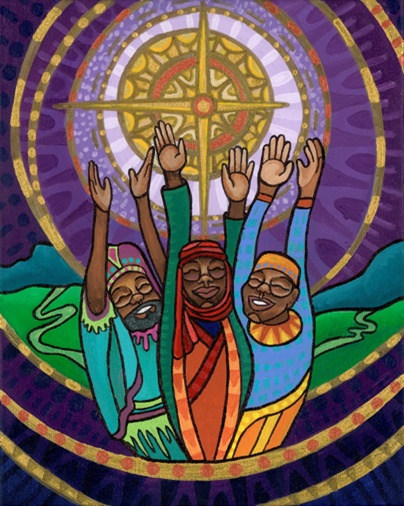 Today we tell a magnificent story about some wise men from the East who followed a star, leading them to Bethlehem and a newborn king.
✠
 https://diglib.library.vanderbilt.edu/act-imagelink.pl?RC=57077 [retrieved December 29, 2023]. Original source: Lauren Wright Pittman, http://www.lewpstudio.com/." width="179" height="95" />There has always been some debate in our house about what ornament is appropriate for the top of the Christmas tree. Should it be an angel or a star? Lindsay’s family always placed an angel at the top of the tree. In my family, however, we followed a different tradition. Our tree always had a bright star, lifted high, shining its light.
This year, for the first time in forty years, we have an angel on top. It’s very small, because we have a Charlie Brown tree. It can’t support the weight of the star. (Besides that, the lights on our poor star have burnt out!)
✠
The wise men, or Magi, were great observers of the skies. They studied the constellations and believed that heaven and earth were linked together. Happenings in the stars were portents or signs of momentous things happening here on earth.
These men were not of Jewish faith. They were Gentiles, perhaps Zoroastrians, from the modern day area of Iran, as some have speculated.Do you find it strange that foreigners, outsiders, could have insight into the birth Christ?  But God is God of all people, don’t you know? – the whole creation!
Here we have people from another part of the world making a long and arduous journey, following a star to greet a king born in a tiny Judean village. This king, though Jewish by birth, will be for all the people. So here we have even Gentiles rejoicing!
✠
They followed a star.
Last winter, Lindsay and I were in Waskesiu. Parks Canada had a program in the evening, so we went down to the lake, where there were bales of straw set in a circle, with a fire to keep us warm. The leader handed out a star chart, and helped us to identify some of the constellations. She told us stories that circulated among indigenous people about the stars and their interactions with humanity.
 There’s a universal appeal to this. Our planet earth is set in the midst of stars, and so they appear in some form to everyone, wherever we may be.
I’m reminded of enslaved people in America who had a song called “Follow The Drinking Gourd.” That was their name for the Big Dipper. If you line up the two stars at the end of the dipper they point to a third star, the North Star, around which all the others appear to move.
The North Star was a guide for them. It promised to lead them on a journey to the northern states and across the border to Canada where they hoped to find their freedom.
✠
 What star of promise have you followed? How did you first discover the light of God?
Did you have family, or friends, or a community to guide you? I remember my mom reading me Bible stories at bedtime. That is one way.
https://commons.wikimedia.org/wiki/File:Polaris_DSS.png" width="285" height="36" />But the wise men show us there are many ways. They looked to the stars to discover an order and meaning to the universe. And when they saw an anomaly – an object in the sky never seen before – they were compelled to pursue it. Why else would they journey so long and far? They were compelled.
In my experience, there is something powerful at work here: The activity of God’s Holy Spirit, leading us ever closer to the life of Christ.
It was St. Augustine who developed the idea of God’s prevenient grace – God’s grace that works in our lives before we know anything about it. The Spirit of God stirs in our hearts, awakening our desire, drawing us to the light of Christ.
So what brought you to Jesus? Was it someone you knew? Was it the sheer wonder of being alive here on God’s good earth? Was it curiosity? Was it some desperate need – for hope or forgiveness? Was it the beautiful life that Jesus lived, and the wish that you might live it too? Did you stumble into Jesus quite by accident, or so you thought?
What was the star that led you to him?
✠
And now, tell me this: Is that star still shining? I ask because sometimes our faith can begin with enthusiasm, then become lost in all the myriad stars of the sky.
I notice that sometimes at night when I’m looking up at the stars of heaven. Something will catch my attention for a split second, out the corner of my eye. But when I try to look directly at it, it disappears.
Here’s a scientific explanation for that: There are two kinds of light receptors in our retinas: One helps us to see in colour. The other enables us to detect very faint light. Looking to one side allows us to see those blinking stars, which we might otherwise miss.[1]
What star are you following? What do you see? What has captured your attention? What is compelling you forward on your journey?
✠
It’s interesting how we’ve come to use that word “star” to describe all sorts of things. We speak of “rising stars” in the world of sports, and theatre, and business and academia.
 At eighteen years old, Connor Bedard is seen as a rising star in the hockey world. This rookie player, and former Regina Pat, was the number 1 pick in the 2023 draft. He has recently emerged as the youngest player ever selected for an NHL All-Star Game. Eighteen years old and he’s already a star![2]
What star are you following? A political star, a literary star? A technological star? Who or what captures your attention, and motivates your journey? What do you find compelling?
https://commons.wikimedia.org/wiki/File:Connor_Bedard_rookie_closeup.jpg" width="186" height="46" />And now, listen: Do any of these stars draw us closer to Jesus?
A good indication of this might be how you spend your time. So take a moment now and think about that. How do you fill your days? Does any of it bring you closer to Jesus?
Or consider this: How are you spending your treasure – your precious gold and frankincense and myrrh? Who do you bow down to? What is the object of your devotion?
I wonder if these questions might make us a little bit uncomfortable?
✠
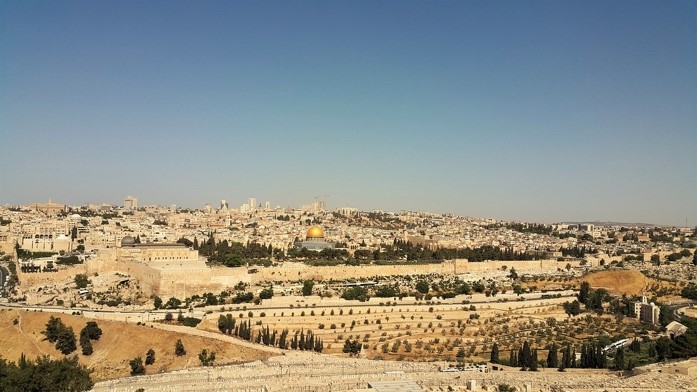 The wise men arrive in Jerusalem with some questions of their own. “Where is the child who has been born king of the Jews? For we observed his star at its rising, and have come to pay him homage.”
“We observed his star.” But no one in Jerusalem has observed a thing. “We have seen its rising in the East.” But they know nothing about it. “We have come to pay him homage.”
And now Herod gets a little antsy. “Pay homage to whom? Aren’t I the king?” He flies into panic mode and calls all his religious officials together to inquire where the Messiah will be born.
“In Bethlehem,” they tell him. But Herod is in no mood to welcome this Messiah. Herod, you see, is following a different star: The star of power and wealth and status, which he will not relinquish. The star he follows has no room for Jesus. The star he follows is threatened by Jesus.
“Go find him,” he tells the wise men, “Let me know when you do.” And now instead of a star, we see a dark and terrible shadow fall upon the land and its inhabitants. Because, in a fit of fury, he will order all the children in Bethlehem, two years old and under, to be killed.
Does the star we follow take us closer to Jesus? Or does it lead us farther away?
 ✠
✠
What star do you follow?
Some time ago, I heard an interview with a pilot from World War Two. He flew many dangerous missions. He said the mark of a really good pilot is the ability, when instruments fail, to navigate by the stars. He always got his plane and the crew he carried back to base.
The stars can tell you where you are, and point in the direction you need to go. They can guide your journey home. It’s a skill not so familiar to our modern world.
What star are you following? As we enter this new year, may the star that points to Jesus lead us on our journey. And, at the end of all things, may it guide us to our home. Amen.
✠
[1] https://www.sciencefocus.com/the-human-body/why-can-you-see-faint-stars-better-if-you-dont-look-directly-at-them, Accessed January. 5, 2024.
[2] https://www.msn.com/en-us/sports/nhl/he-shouldnt-be-an-all-star-this-year-nhl-fans-divided-over-connor-bedards-all-star-game-selection-representing-chicago-blackhawks/ar-AA1munk6, Accessed January 5, 2024.